

1 · Trench & bed
The line is trenched to grade and bedded — slope is everything, and we shoot it, not guess it.
Drainage is a specialty here, not a side service — it's the work our company was built on, and the work county crews trust us with on their own facilities. Recessed systems in solid pipe, rock channels where the water should run in the open, and yards restored when we're done. If your yard holds water, we find out why — and fix the cause.
Our own capability statement says it plainly: Four Seasons specializes in drainage and stormwater solutions for government, commercial, and residential clients. We maintain stormwater facilities for Harford County — bioretention systems, rain gardens, and drainage infrastructure that has to perform to standard, because it's checked. The system we'd install in your yard is built the same way, by the same crews, to the same standard.
Drainage and stormwater work on record includes Harford County DPW, Harford County Water & Sewer, Harford County Public Schools, and Baltimore City Public Schools — from school rain gardens to county bioretention restoration.
A yard that won't dry out is telling you something. Water that pools against a foundation works its way into basements and crawlspaces. Water with nowhere to go saturates the soil, drowns turf and plantings, breeds mosquitoes, and turns low spots into mud that never firms up. And most of the time, the cause isn't the rain — it's a fix that was never built to last.
The usual culprits are black corrugated pipe crushed under the soil or clogged with roots, downspouts that dump roof water right at the foundation, and grading that sends the yard's water toward the house instead of away from it. Another drain in the wrong place won't fix any of that. The system has to be designed around how water actually moves across your property.
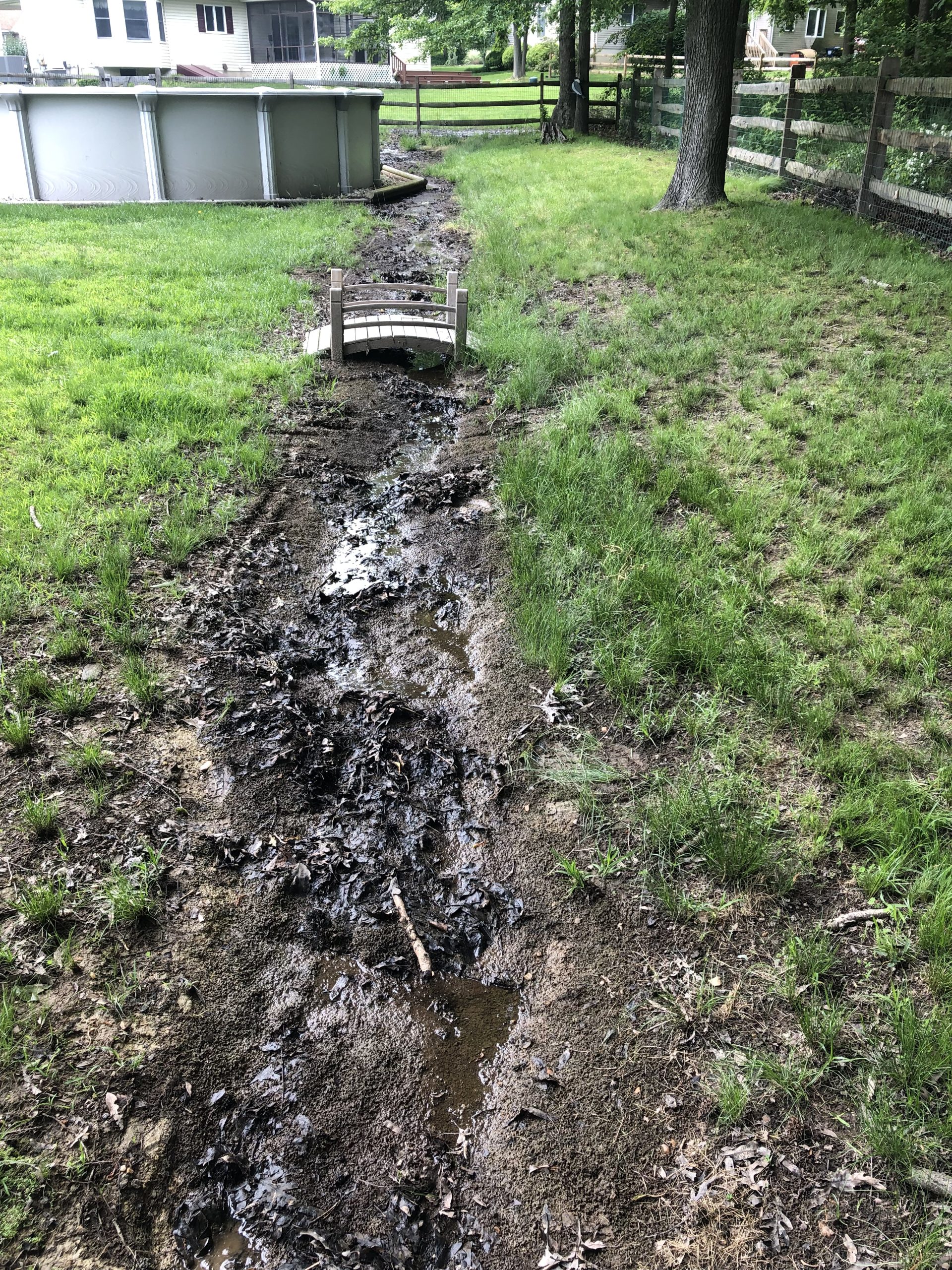
A recessed drainage system isn't a pipe in a hole. It's six decisions, each one made for the property in front of us — and each one is a place a cheaper install cuts a corner you'll pay for later.
Water only moves downhill, so the fall of every run is set and checked with a laser before a shovel touches the ground. Too flat and the line silts up; pitched wrong and the water sits exactly where it did before.
The trench is lined with filter fabric before any stone goes in. The fabric keeps the surrounding soil from migrating into the stone bed and choking the system from the outside in.
The pipe rests in a bed of clean stone, not backfilled dirt. Stone holds the pipe at grade, lets water reach it along the full length of the run, and won't settle or shift the way soil does.
Smooth-wall solid pipe carries water and debris through instead of trapping them. Corrugated pipe's ridges catch sediment, invite roots, and the thin walls crush under soil and traffic. It's the single most common failure we dig up — and we never install it.
Roof water is usually the biggest load on a yard. We tie downspouts directly into the buried system, so a roof's worth of rain goes into the pipe — not onto the ground at your foundation, and not across the lawn in a plastic extension.
Access points at grade let the line be inspected and jetted years from now, and every system ends at a proper discharge — a pop-up emitter, daylight, or a rock channel — placed where the water can leave without eroding anything on its way out.
Financing available through Acorn — ask when you request your estimate.
Drainage is one of the few landscape jobs where the proof is underground. Here's ours, in the open — literally. Every photo below is the same Harford County job, in order.
The line is trenched to grade and bedded — slope is everything, and we shoot it, not guess it.
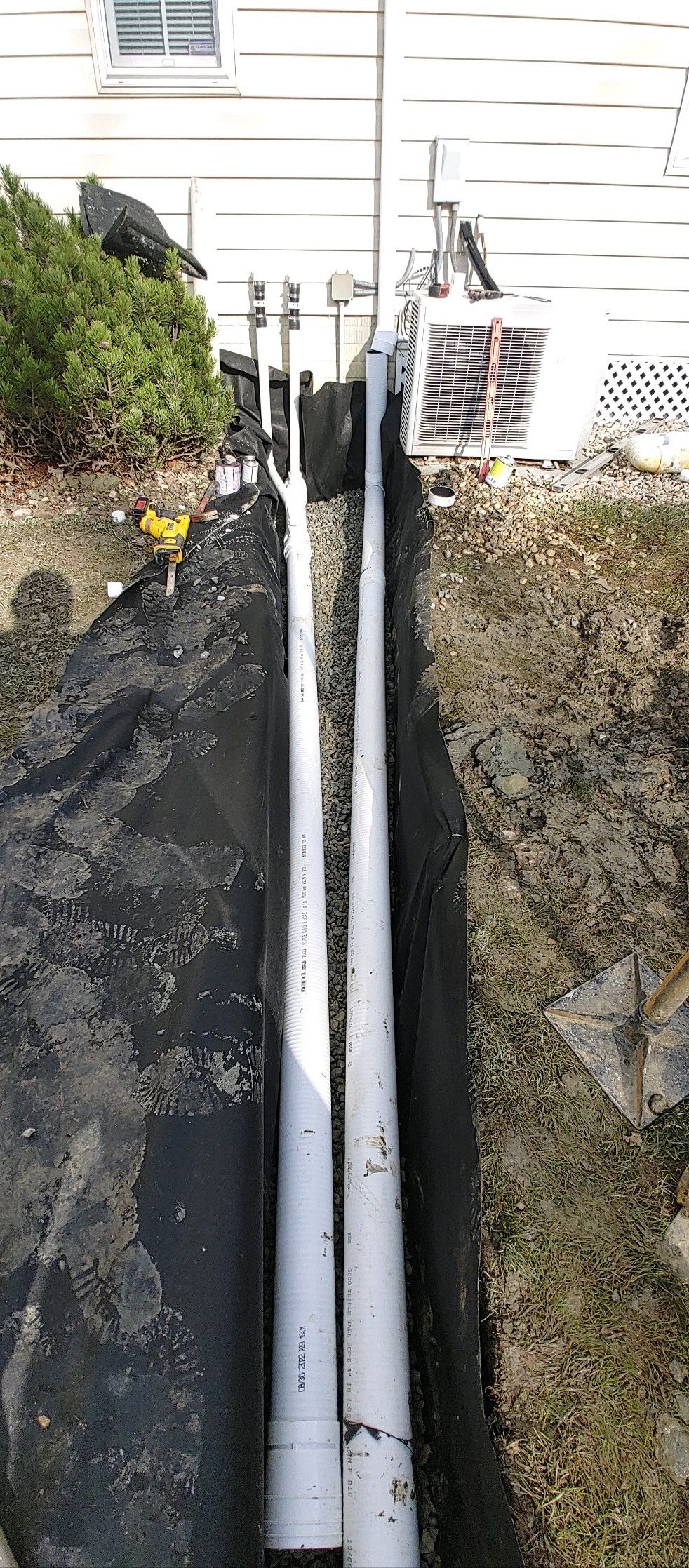
Pipe bedded in clean stone — the run that will carry water away for decades.

Buried, backfilled, and restored with seed mat — then the lawn grows back over a system you'll never see again.
"Great price. Four Seasons Landscape & Construction Services did a fantastic job at my home. Their crew was great to work with, and I'm totally satisfied with the results. Highlt recommended!"
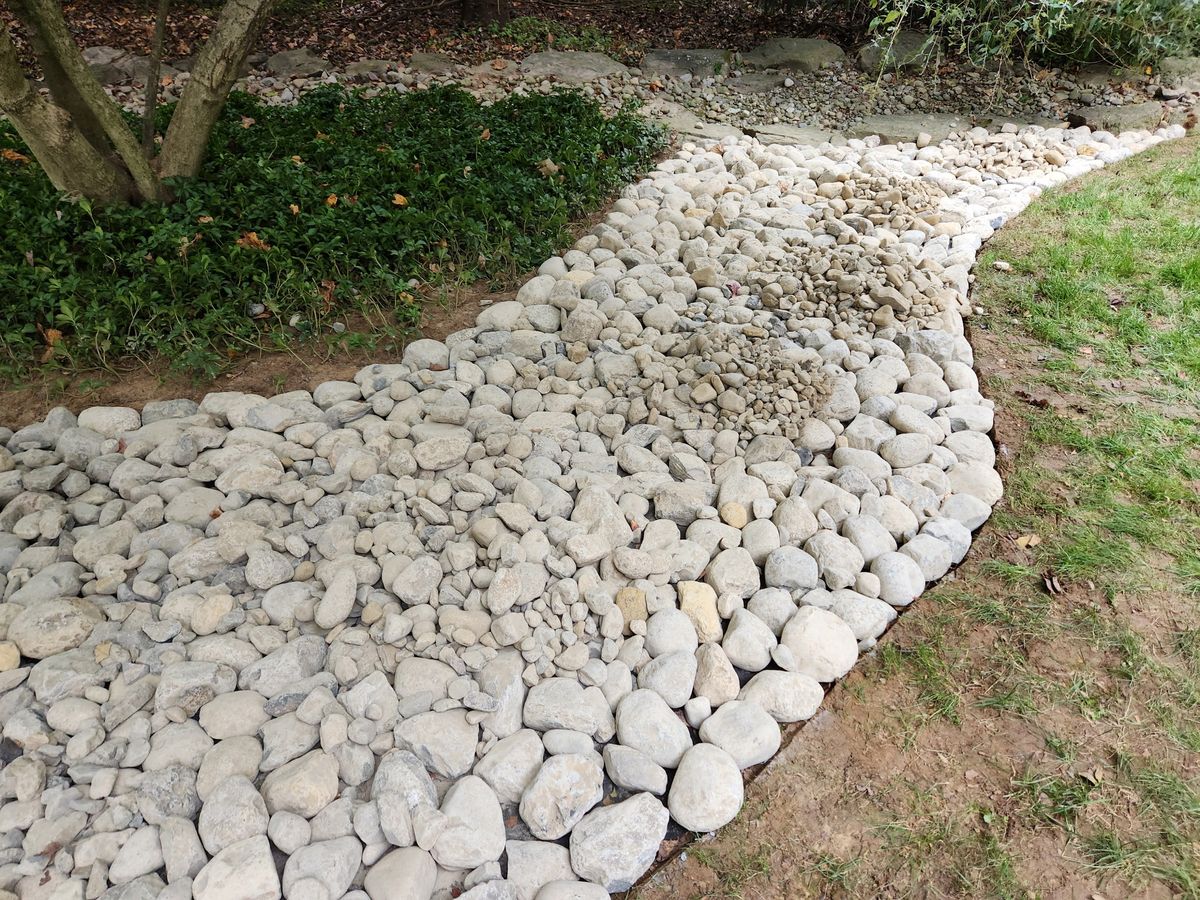
Where water runs across the surface — a swale path, a slope, the low line between two properties — a river-rock channel is often the better answer. It's an armored waterway: rock bedded and edged so moving water can't erode the soil, built to read as a dry creek bed in the landscape. It's finished the day it's built, and it never clogs, crushes, or washes out.
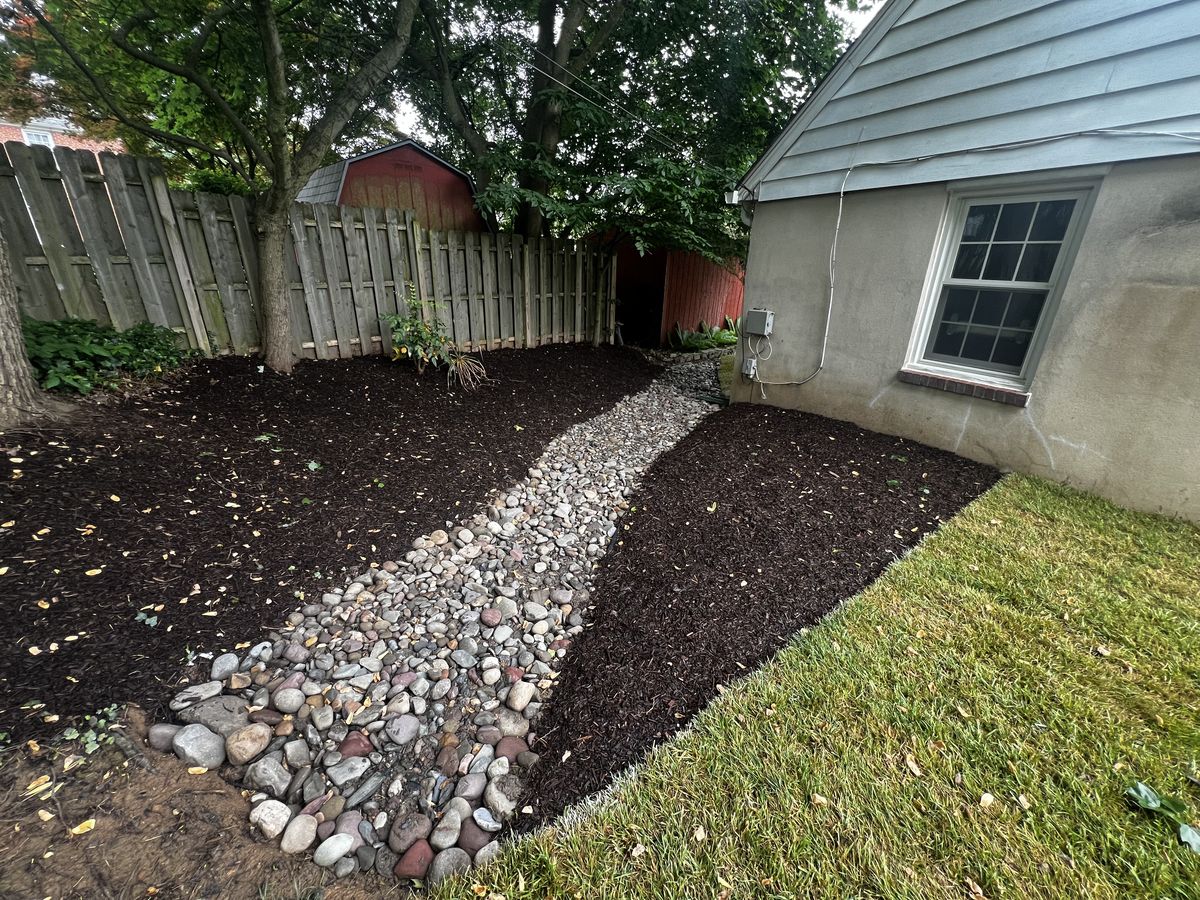
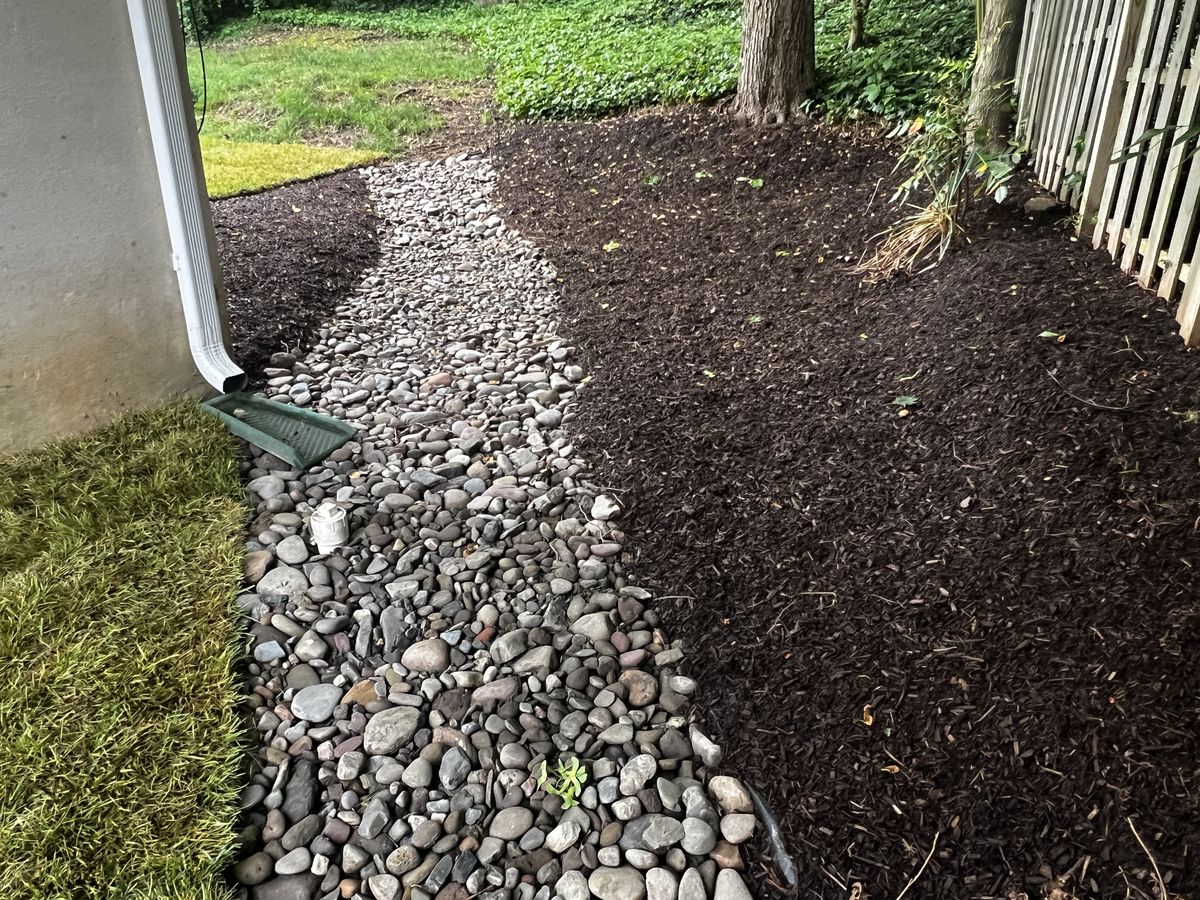
If your property already has a buried system — ours or someone else's — it doesn't have to be replaced to be rescued. We locate and open the system, jet the lines clear with high-pressure water, and check the discharge. Sediment, roots, and years of mulch wash are the usual findings; most lines that "failed" are simply full.
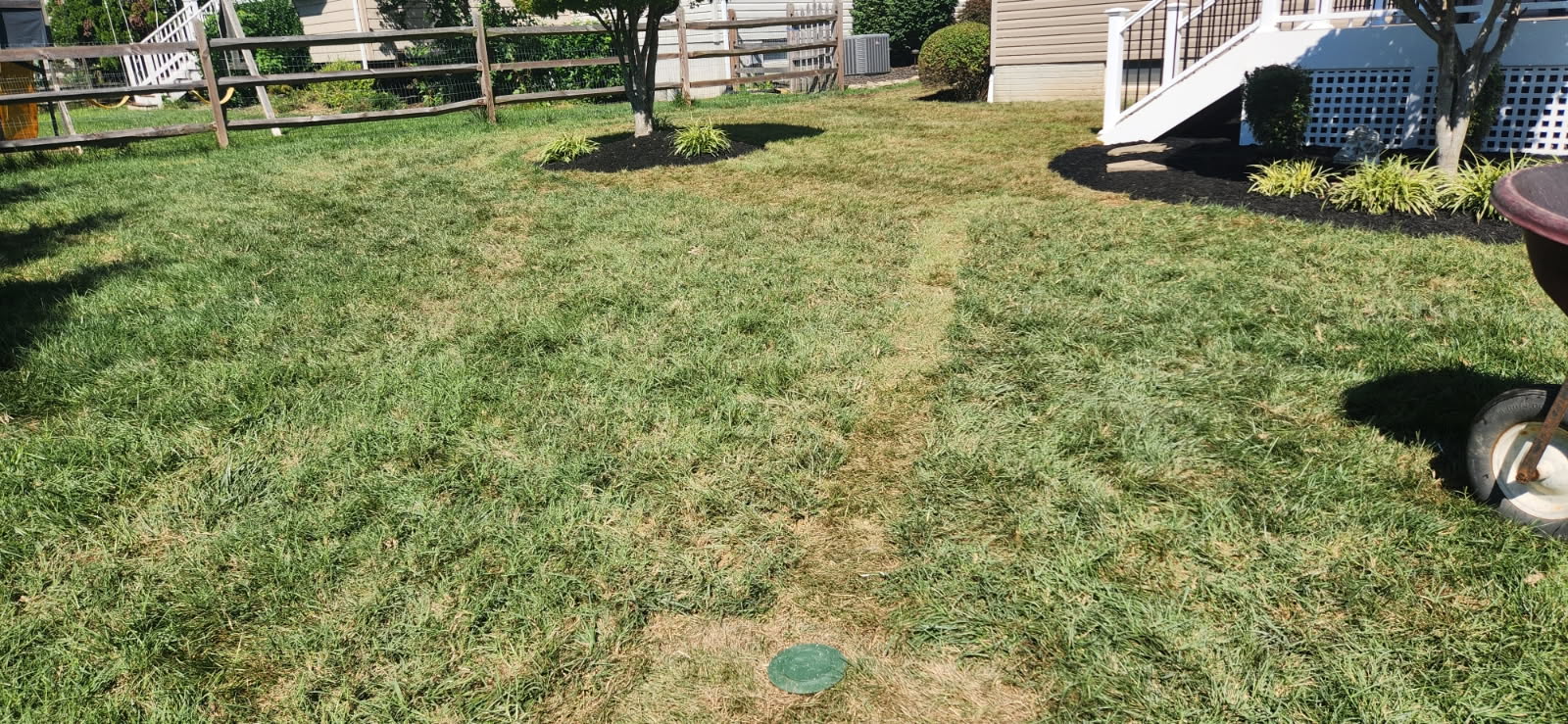
And when a buried system goes in, this is what finished looks like: the system invisible by design, the yard above it just a yard again — lawn and beds restored, nothing to trip over, nothing to look at. The property pictured here is a completed drainage job; the system is underground, doing its work out of sight.
Because it's the failure we dig up most. The ridges trap sediment, roots grow in, and the thin wall crushes under soil load and foot traffic. Solid smooth-wall pipe costs a little more on day one and keeps working for decades — corrugated usually needs to be dug up and replaced.
A recessed system, no — that's the point. You'll see a cleanout cap at grade and the discharge point, and the yard restored with seed and straw. Within a few weeks of growth, there's nothing left to look at but lawn.
Most residential systems are completed in a day or two. Larger systems, rock channels, and multi-run layouts are scoped on site and scheduled honestly.
No. The work follows the trench lines — typically a working width of a few feet — and everything the trench touches is restored: backfilled, graded, seeded, and matted before we leave.
With an assessment. We walk the property, trace where the water comes from and where it can safely go, and tell you plainly whether you need a buried system, a rock channel, regrading — or none of it.
Water pools at your foundation, beds stay soggy days after rain, or a slope keeps eroding — and you want it solved once, underground and out of sight.
The water is coming from a roof leader, a grading problem, or a neighbor's run-off — sometimes the right fix is smaller, and we'll tell you.
Surface-only quick fixes and plastic extension pipes. We install buried solid-pipe systems — and if your yard needs something else entirely, we'll say so and point you the right way.
One call covers it — season after season.
Contact Four SeasonsCall 443-390-9273