
When a lawn is past patching.
Lawns rarely fail for one reason. A tree canopy thickens and the grass starves for light. Foot traffic and mowers pack the soil until roots can't breathe. Water sits where the grade went flat, or runs off where it shouldn't. And sometimes the turf is simply old — thin, patchy, and more weed than grass. Seeding over problems like those just buys the same lawn again next year.
So we start with the cause, not the cure. If most of the lawn is still sound, we'll tell you a targeted repair will do it — new sod or seed in the failed areas, graded and prepped the same way. If the failure runs lawn-wide, a full renovation is the honest job: old turf out, soil fixed, grade corrected, then sod or seed across the whole area. Either way, the prep is the same — and the prep is what makes it last.
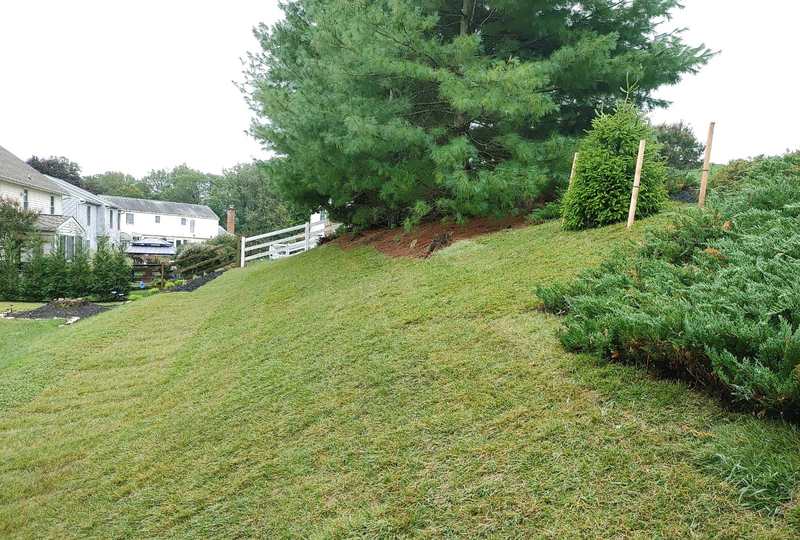
How we rebuild a lawn.
Full lawn renovation & reestablishment
The whole lawn, started over: old turf and weeds out, soil and grade fixed, then sod or seed across the entire area. For lawns where the failure is everywhere, not in spots.
Grading & soil preparation
The step that decides whether a new lawn lasts. We correct the grade so water moves the right way, add topsoil where it's needed, and loosen and level the soil before anything green goes down.
Sod installation
Fresh sod, laid tight and rolled on a properly prepped base — an instant lawn that knits in over the following weeks. The fastest route from bare dirt to a yard you can use.
Seeding with straw mat
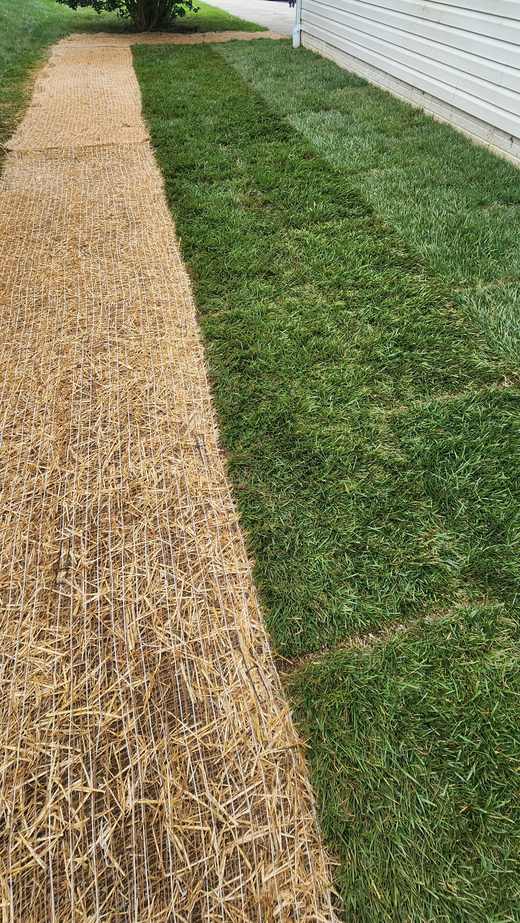
Seed spread on prepped soil and covered with a straw erosion mat that holds moisture, keeps seed in place on slopes, and protects it while it germinates.
Lawn repair & patch restoration
For lawns that are mostly sound: we cut out the failed patches — worn paths, dead spots, dug-up areas — fix the soil underneath, and sod or seed just those areas to match.
Restoration after drainage or construction
Trenches, dig lines, and torn-up turf put back right: backfilled, graded, topsoiled, and finished with sod or seed so the project disappears into the lawn.
Financing available through Acorn — ask when you request your estimate.
New lawns, honestly labeled.
Every photo below is Four Seasons work in Harford and Baltimore Counties. New sod and new seed don't look like a golf course on day one — so we show them the way they honestly look on install day: seams, straw, and all.

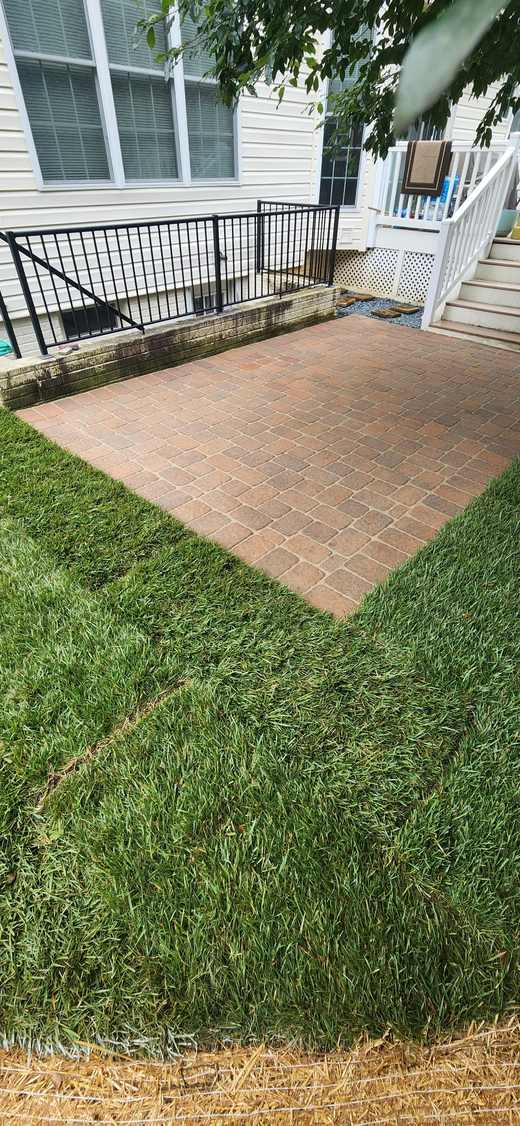


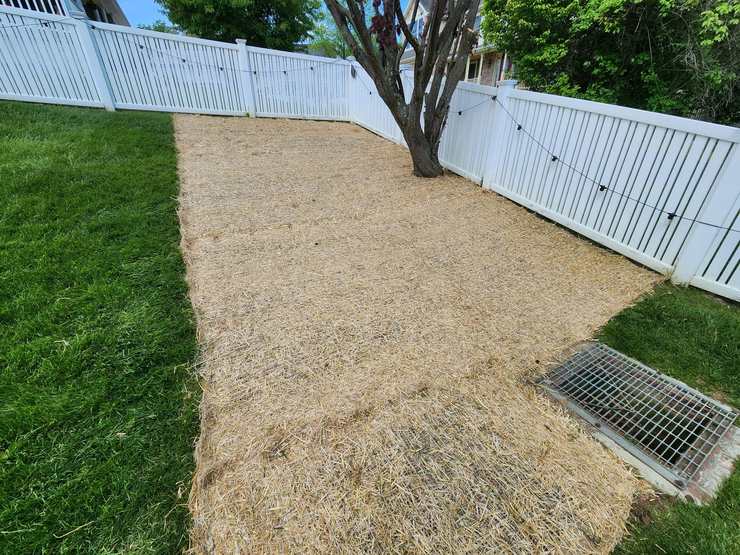
The strip that wouldn't grow.
Along this Bel Air patio, the grass never stood a chance — the strip at the edge had eroded down to bare dirt, and what grass remained was thin and patchy. Our part of this job was the lawn only: we stripped the failed turf, brought in fresh topsoil, regraded the strip, and laid about 600 square feet of new sod along the patio and the back wall. The patio and seat wall were already there. The after photo was taken at dusk on the day the sod went down — the new grass was still settling in, and it knits tighter over the following weeks.
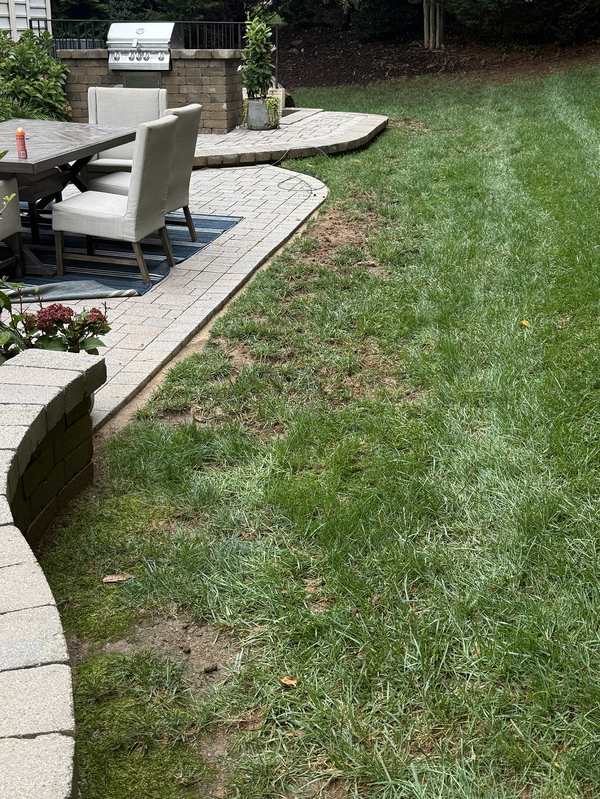

From worn out to growing again.
Diagnose the cause
We walk the lawn and find what's actually killing it — shade, compaction, standing water, or turf that's worn out — before we touch it. Renovating over the cause just grows the problem back.
Strip and grade
Failed turf and weeds come out, and the area is graded so water drains away from the house and doesn't pool on the new lawn.
Topsoil and soil prep
Fresh topsoil goes where the soil is thin or poor, and the whole base is loosened, leveled, and firmed — the foundation the new lawn roots into.
Sod or seed
Sod for an instant lawn, seed where it makes sense — matched to your sun, your soil, and how fast you need the yard back.
Mat, edge and finish
Seeded areas get a straw erosion mat to hold moisture and keep seed in place. Edges are cut clean where the lawn meets beds, walks, and drives.
Establishment
New grass lives or dies on watering. We leave you clear watering instructions and first-mow guidance — when to water, how much, and when the lawn is ready for its first cut and real use.
Common lawn questions.
Sod or seed — which is right for my lawn?
Sod is an instant lawn: it goes down green, holds slopes and edges right away, and can take light use in a few weeks — and it costs more. Seed costs less and suits large or lightly damaged areas, but it needs weeks of careful watering and most of a season to fill in thick. We'll tell you honestly which one your lawn, your slope, and your timeline call for — we often use both on the same property.
How long until a renovated lawn can be used?
New sod roots in about two to three weeks in growing weather; keep traffic light until it knits, then use it normally. A seeded lawn takes longer — germination in one to three weeks, light use after the first few mowings, and a full season before it plays like an established lawn. Either way, we'll give you the timeline for your lawn before we start.
What watering does new sod or seed need?
More than most people expect, at first. New sod needs to stay consistently moist while it roots — usually daily watering for the first couple of weeks. Seed needs to stay damp until it germinates, which can mean light watering once or twice a day. We leave written watering instructions with every renovation, and we'll show you how to taper off as the lawn establishes.
Can you fix the drainage that's killing my lawn?
Often, yes — standing water and soggy ground are two of the most common reasons a lawn fails. We install recessed drainage: solid pipe buried below the surface that carries water away from the lawn for good. If drainage is part of your lawn's problem, we'll scope it during the visit — our drainage services page shows how those systems work.
Will you restore the lawn after a drainage or construction project?
Yes — that's some of our steadiest work. When a project tears up turf — a drainage line, a deck build, utility work — we backfill and settle the ground, add topsoil, regrade, and finish with sod or seed, so the lawn comes back whole instead of wearing a scar.
Is a lawn renovation right for your property?
A good fit if…
Your lawn is bare, thin, or weed-filled across large areas; it failed after construction or drainage work; or the grade leaves water standing where grass should grow — and you want it fixed at the soil, not sprayed over.
Talk to us first if…
You're not sure whether your lawn needs a full renovation or just targeted repair. We'll walk it with you and tell you which one it actually needs — even when the honest answer is the smaller job.
Not what we do
Aeration and overseeding, irrigation systems, pools, and gutter cleaning. We renovate lawns — if your project needs one of those, we'll point you to a company we trust.
Ready to talk about your lawn?
One call covers it — season after season.
Contact Four SeasonsCall 443-390-9273